Larry Torres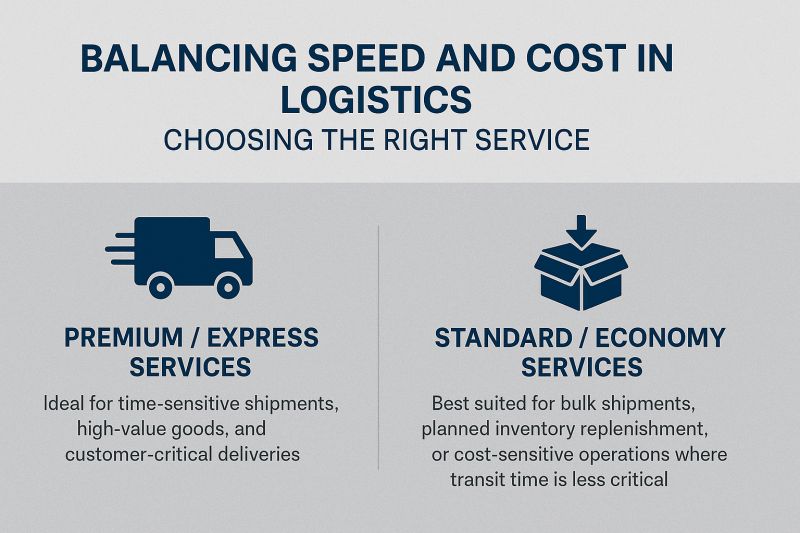
Introduction
In today’s competitive business environment, customers expect fast deliveries, affordable prices, and excellent service. At the same time, businesses face rising transportation costs, labour shortages, and supply chain disruptions. Meeting these expectations while controlling expenses is one of the biggest challenges in supply chain management. Successfully balancing cost, speed, and service allows businesses to remain profitable while delivering a positive customer experience.
Rather than focusing on one priority alone, organizations should adopt a balanced approach that aligns their supply chain strategy with business goals and customer expectations.
Understanding the Three Key Priorities
Cost, speed, and service are closely connected, and improving one often affects the others.
- Cost refers to the expenses involved in sourcing, manufacturing, storing, transporting, and delivering products. Controlling these costs helps improve profit margins and maintain competitive pricing.
- Speed measures how quickly products move through the supply chain, from procurement and production to final delivery. Faster processes improve responsiveness and customer satisfaction.
- Service focuses on delivering the right products at the right time while maintaining quality, reliability, and clear communication throughout the customer journey.
The challenge lies in finding the right balance instead of maximizing one area at the expense of another.
Strategies for Achieving the Right Balance
Businesses can improve supply chain performance by implementing practical strategies that support all three priorities.
1. Use accurate demand forecasting:
Reliable forecasting helps businesses purchase the right amount of inventory, reducing excess stock while preventing costly stock-outs and delayed deliveries.
2. Optimize inventory levels:
Maintaining the right inventory balance lowers storage costs without compromising product availability or customer service.
3. Strengthen supplier relationships:
Working closely with dependable suppliers improves lead times, product quality, and pricing while reducing supply chain risks.
4. Leverage technology and automation:
Inventory management systems, transportation management software, and warehouse automation improve visibility, reduce manual errors, and accelerate operations.
5. Improve warehouse efficiency:
Optimized warehouse layouts, barcode scanning, and streamlined picking processes reduce order fulfillment times while lowering operating costs.
6. Choose the right transportation methods:
Businesses should evaluate shipping options based on delivery urgency, cost, and customer expectations instead of relying on the fastest or cheapest option every time.
7. Monitor supply chain performance:
Tracking key performance indicators (KPIs) such as order accuracy, fulfillment time, transportation costs, and customer satisfaction helps identify areas for continuous improvement.
The Role of Data and Visibility
Modern supply chains generate valuable operational data. Real-time visibility allows businesses to monitor inventory, shipments, supplier performance, and customer demand across the entire supply chain.
With access to accurate data, decision-makers can respond quickly to disruptions, optimize inventory placement, improve forecasting accuracy, and allocate resources more efficiently. Greater visibility also enables proactive problem-solving before small issues become costly delays.
Conclusion
Balancing cost, speed, and service is not about choosing one priority over another. Instead, it requires careful planning, data-driven decision-making, and continuous improvement across every stage of the supply chain.
By investing in technology, strengthening supplier partnerships, optimizing inventory, and monitoring performance, businesses can create a supply chain that delivers value to both the organization and its customers. A well-balanced supply chain not only improves efficiency but also builds resilience and supports sustainable long-term growth.